What to Bring to Your Global Entry Interview (2026): Documents & Checklist
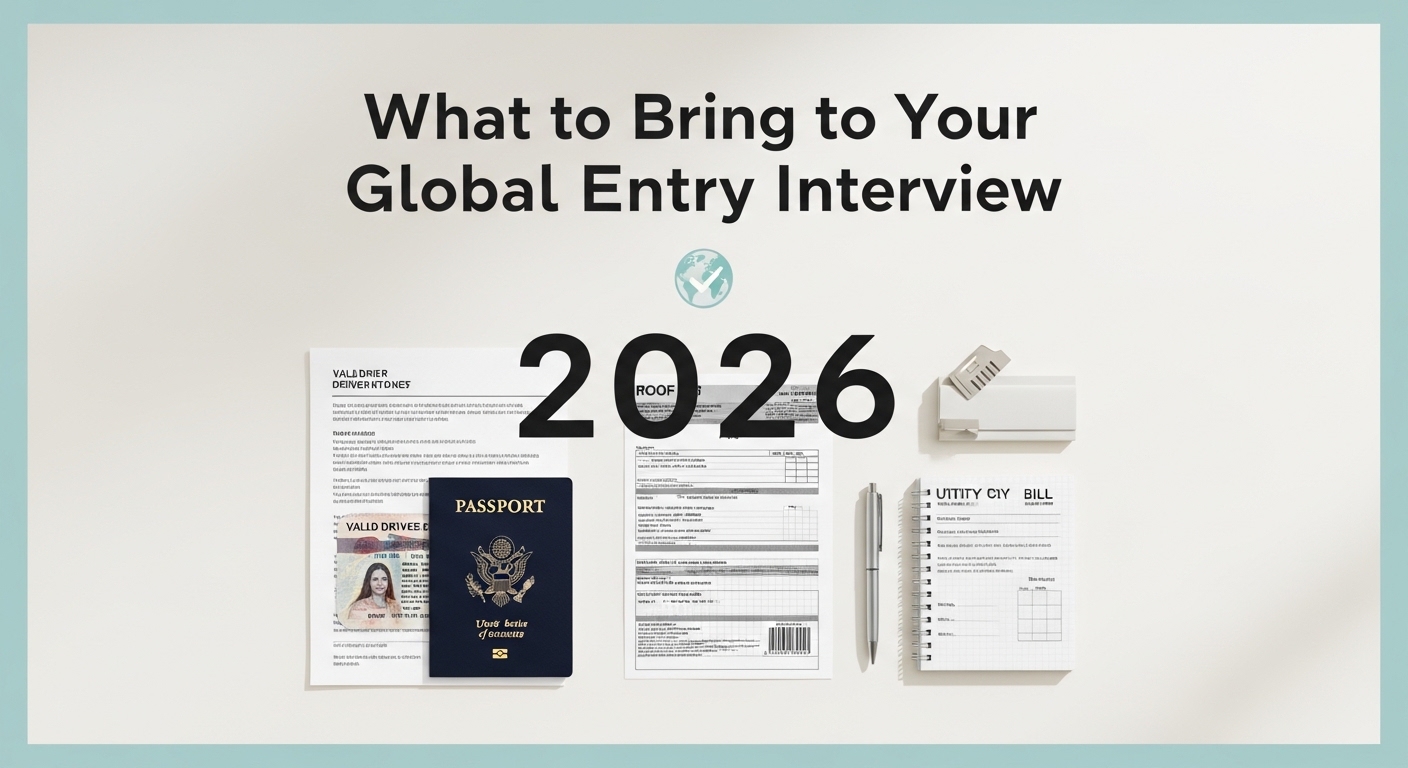
Showing up without the right documents can get you turned away. Here’s exactly what to bring to your Global Entry interview in 2026: required documents (passport, ID, proof of residency when needed), what to wear, what not to bring, and a simple checklist so you’re ready.
In this article
Required documents (U.S. citizens)
For your Global Entry interview, CBP expects originals - not copies - and documents must be valid (not expired).
- Valid U.S. passport. This is your primary identity and citizenship document. The passport number and details must match what’s in your Trusted Traveler Programs (TTP) application. If you renewed your passport after applying, update your TTP profile and bring the new passport.
- Valid driver’s license or state-issued ID. Used as a second form of ID and to verify your address when relevant. The name (and address if on the ID) should match your application.
Expired documents are not accepted for primary verification. If your passport or license is expiring soon, renew before your interview so you’re not sent away. For name changes (e.g., after marriage), see how to update Global Entry after a name change and bring any supporting documents (e.g., marriage certificate).
What CBP actually checks
At the interview, the officer typically:
- Verifies that your passport and ID match the name, date of birth, and other details in your TTP application.
- Confirms your citizenship or immigration status and eligibility for Global Entry.
- May ask about travel history, employment, or address to confirm consistency with your application.
- Completes enrollment (e.g., fingerprints, photo) and approves or defers your membership.
Documents are checked in real time. Inconsistencies - such as a different name on your ID than on your application, or an expired passport - can delay or complicate the interview. For the kinds of questions officers ask, see common Global Entry interview questions.
Proof of residency (when it’s needed)
Some centers or officers ask for proof of residency - for example a utility bill, lease, or bank statement showing your current address - if:
- Your address has changed recently
- Your driver’s license address doesn’t match your application
- You’re in a category where residency is routinely verified (e.g., certain non-citizens)
It’s not always required, but having one document in your name and current address can smooth things over if they ask. Don’t assume you won’t need it; bring it if your address has changed or might be questioned.
Documents for green card holders & non–U.S. citizens
Eligible non–U.S. citizens (e.g., lawful permanent residents, citizens of certain other countries) must bring:
- Valid passport from country of citizenship
- Permanent resident card (green card) or other proof of status as required by CBP
- Valid U.S. or state-issued ID (e.g., driver’s license) when applicable
Requirements can vary by citizenship and status. Check the official TTP site and any CBP correspondence for your situation. For more, see Global Entry guide for immigrants and green card holders.
What to wear
There’s no formal dress code. Business casual or neat casual is fine. The interview is short and professional. Avoid hats or anything that could obscure your face, since they may take or verify a photo. You’re not going through security; you’re meeting an officer in an enrollment center, so comfortable and presentable is enough.
Simple checklist
- ✓ Valid U.S. passport (or approved citizenship/identity document) - matches TTP application
- ✓ Valid driver’s license or state ID
- ✓ Proof of residency (utility bill, lease, or bank statement) if your address changed or might be questioned
- ✓ Printed copy of your conditional approval or TTP dashboard (optional but helpful)
- ✓ Name-change documents (e.g., marriage certificate) if your name differs on any document
- ✓ Green card / status documents if you’re not a U.S. citizen
Double-check the day before: documents are valid, names and addresses match your application, and you’ve updated TTP if anything changed (e.g., new passport).
Don’t forget
If you still need to schedule your interview after conditional approval, slots at busy centers go fast. See why Global Entry appointments disappear in 60 seconds and what to do after conditional approval to get an appointment and know what to bring.
Need an interview slot? Get alerted when one opens.
GE Finder monitors 200+ enrollment centers and emails you the moment an interview opens at your chosen locations. You still book through the official TTP site - we just tell you when to log in.
Get instant alertsFrequently asked questions
What documents do I need for my Global Entry interview?
You need a valid passport (or approved citizenship/identity document) and a valid driver’s license or state-issued ID. Have proof of residency available if your address might be questioned. Bring originals; expired documents or copies are not sufficient for primary verification.
Can I use a passport card instead of a passport book?
CBP typically requires a valid passport book for Global Entry. Passport cards are not valid for international air travel and are generally not sufficient as the primary document. Use your passport book.
Do I need to bring my conditional approval letter?
It’s not required - the officer can see your status in the system - but a printed copy of your conditional approval or TTP dashboard can help if there’s a glitch or question. Good backup to have.
What should I wear to my Global Entry interview?
Business casual or neat casual is fine. Avoid anything that obscures your face. There’s no formal dress code; the interview is brief and professional.
What if my name on my passport doesn’t match my driver’s license (e.g., maiden vs. married)?
Bring both documents and, if applicable, a marriage certificate or court order for the name change. Explain the discrepancy to the officer. CBP can accept a legal name change with supporting documentation; consistency with your application is what matters.